


For owners whose business looks weaker on paper than it is in real life

Business credit report errors can quietly cost you more than a denial.

A lot of owners assume weak terms, lender hesitation, or confusing responses mean the business itself is weak. In reality, the file behind the business may be stale, split, incomplete, inaccurate, or saying something very different than what is actually true.

If your reports are wrong, polluted, mismatched, or missing the right data, you are not being evaluated based on the business you built. You are being evaluated based on a distorted version of it.

That is a serious problem when the next move matters.

If any of this feels familiar, the issue may not be your business. It may be your file.

This is more common than most owners realize.

And it is expensive.

What are business credit report errors, really?

Business credit report errors are not just obvious mistakes.

Sometimes they are literal inaccuracies: the wrong address, the wrong business name variation, duplicate files, stale information, old records that should have been cleared, or payment history attached to the wrong place.

Sometimes they are structural problems: a thin file that does not reflect real activity, reporting gaps that make the business look weaker than it is, or fragmented records that force lenders to make decisions off an incomplete picture.

Sometimes the error is not that a line item is false. It is that the overall file is misleading.

And when lenders, banks, or underwriters are making decisions quickly, misleading is expensive enough.

Why strong businesses still end up with weak or distorted files

Most owners never built their reporting intentionally.

They built the business.

Then the reporting happened in pieces:
one address here
another address there
personal debt mixed with business obligations
a vendor reporting to one place but not another
an equipment account that never built the business profile the way they assumed
an old issue still showing in a bureau file long after the reality changed
Over time, that creates a lender-facing picture that is fragmented.

And when the picture is fragmented, the conclusions drawn from it usually are too.

What inaccurate or polluted reporting actually costs you

Most owners think about this only in terms of approval or denial.

But the cost is wider than that.
It can show up as:

That last one matters more than it sounds.

A lot of owners are operating with real traction and real ambition, but the underlying file still tells a smaller, weaker, or messier story than the one they are actually living.

Signs your business credit reports may be hurting you

If two or three of those are true, it is worth reviewing before the next application, the next bank conversation, or the next major move.

The lender is not always judging the business you built. They may be judging the file they were given.

That distinction matters.

A lender can only respond to what is visible.

If the file is thin, stale, mismatched, or partially wrong, the lender is not evaluating the business in context. They are evaluating a version of it that lacks clarity.

That can lead to one of the most frustrating situations an owner can face: The business is real. The traction is real. The ambition is real. But the lender-facing profile still looks incomplete, inconsistent, or weak.

That does not always mean the answer is to push harder.

Sometimes the answer is to correct the picture first.

RivenWay starts by reviewing the full picture, not by guessing at the next product

When a business credit file looks weak, polluted, or inaccurate, the first goal is not another application.

The first goal is clarity.

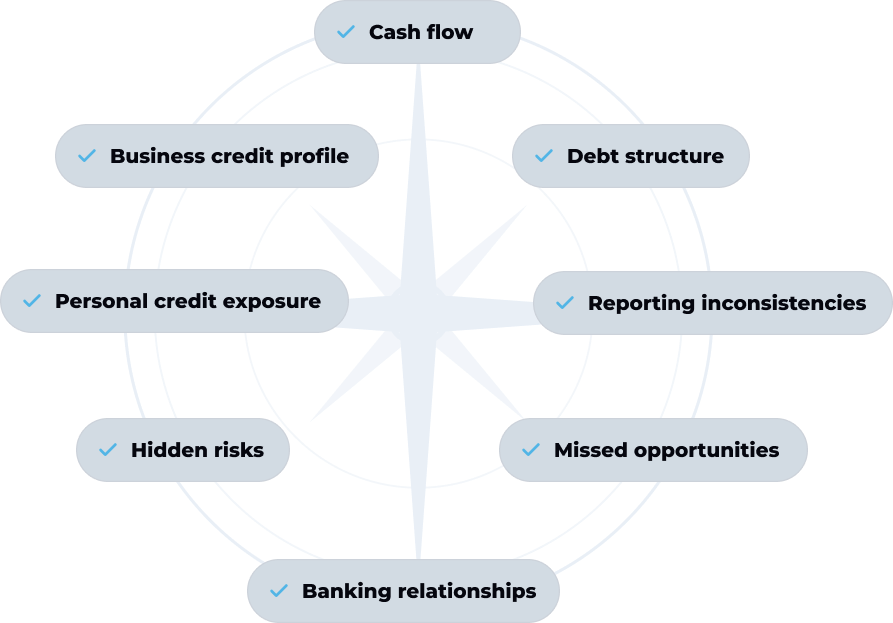
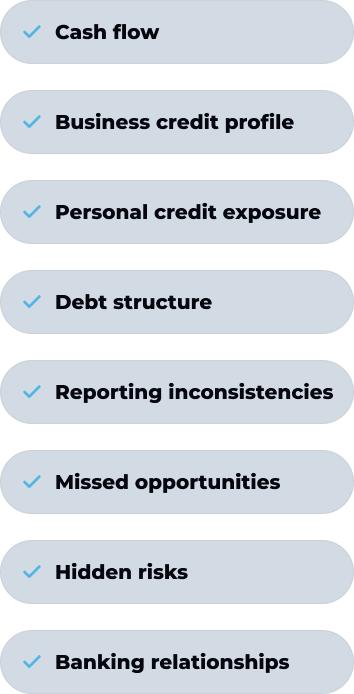
RivenWay’s Financial Review looks at the business through a banker’s-eye lens:

That matters because most owners have never had someone connect the dots live and explain what is actually happening across the profile.
Not what a single lender sees.
Not what one broker wants to sell.
The full picture.

Only then do the right next decisions start to become clear

That matters because most owners have never had someone connect the dots live and explain what is actually happening across the profile.

Not what a single lender sees.
Not what one broker wants to sell.
The full picture.

Only then do the right next decisions start to become clear

This problem is especially common in the trades and home services

Businesses in HVAC, plumbing, electrical, roofing, construction, landscaping, and fleet-heavy operations often grow faster than their reporting infrastructure.

That is not because the owners are careless.

It is because they are busy building crews, taking care of customers, buying trucks, financing equipment, managing payroll, and staying ahead of the next job.

The file gets built around the work, not before it.

That is why reporting problems can sit quietly underneath a business that otherwise looks healthy.

And that is exactly why this issue should be handled before the next major move depends on it.

This is not theoretical. It shows up in real files all the time.

Across real owner journeys, RivenWay repeatedly found reporting problems that were suppressing approvals or distorting how lenders saw the business.
The pattern is clear:

What looks like a credit problem is often partly a data infrastructure problem.

And until somebody reviews that honestly, the owner keeps paying the price for confusion.
That included issues like:
The pattern is clear:

What looks like a credit problem is often partly a data infrastructure problem.

And until somebody reviews that honestly, the owner keeps paying the price for confusion.

Who this page is for

This page is for:

This page is not for:

Frequently Asked Questions

How do I know if my business credit report is actually wrong?
You usually do not know from one clue alone. It is the pattern that matters: weak terms, confusing denials, stale business details, inconsistent bureau records, missing reporting, or lender feedback that does not match the strength of the business.
Yes. Lenders make decisions based on what is visible. If the file is incomplete, fragmented, or misleading, the decision gets made against that version of the business.
No. This is about the full lender-facing picture: reports, entity consistency, address consistency, file depth, banking relationships, and how the business is being interpreted overall.
Sometimes. But if the underlying file is the problem, taking the same distorted picture to a new lender often produces the same frustration in a different room.
Get the full picture reviewed first. If the file is part of the problem, correcting that before the next move usually matters more than pushing another application through blindly.

Before the next lender judges the business, make sure they are seeing the real one.

If something feels off, do not keep guessing. Start with clarity.

Command your own path.